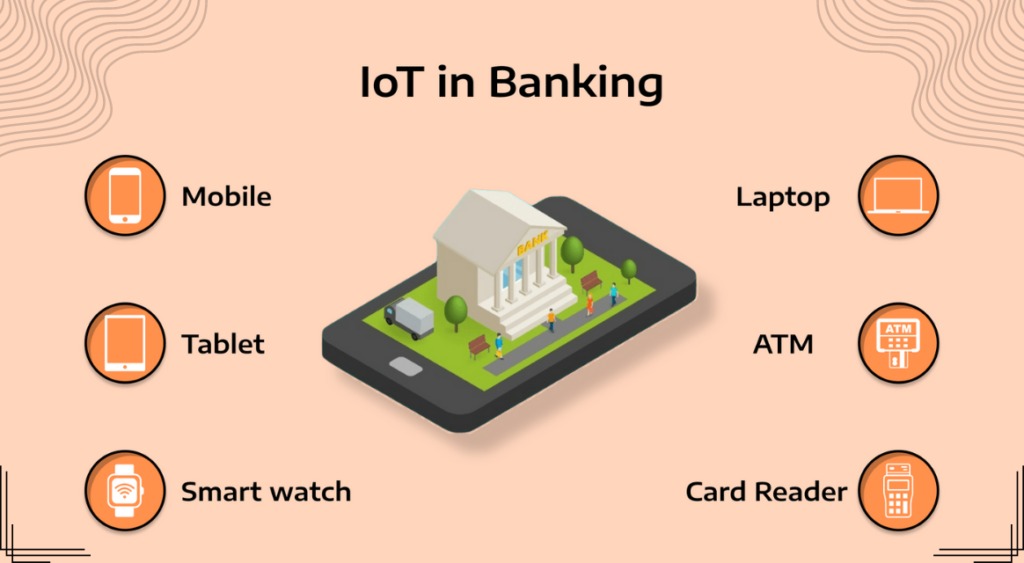
The Internet of Things (IoT) has moved far beyond smart refrigerators and thermostats. In banking and financial services, connected devices are creating measurable value — from reducing ATM downtime by up to 40% to enabling usage-based insurance products that save customers hundreds of dollars annually.
According to a 2024 Deloitte report, financial institutions that actively deployed IoT solutions saw an average 18–22% improvement in operational efficiency and a 15% increase in customer satisfaction scores.
Here are seven proven, real-world use cases that leading banks and fintech companies are already implementing in 2025.
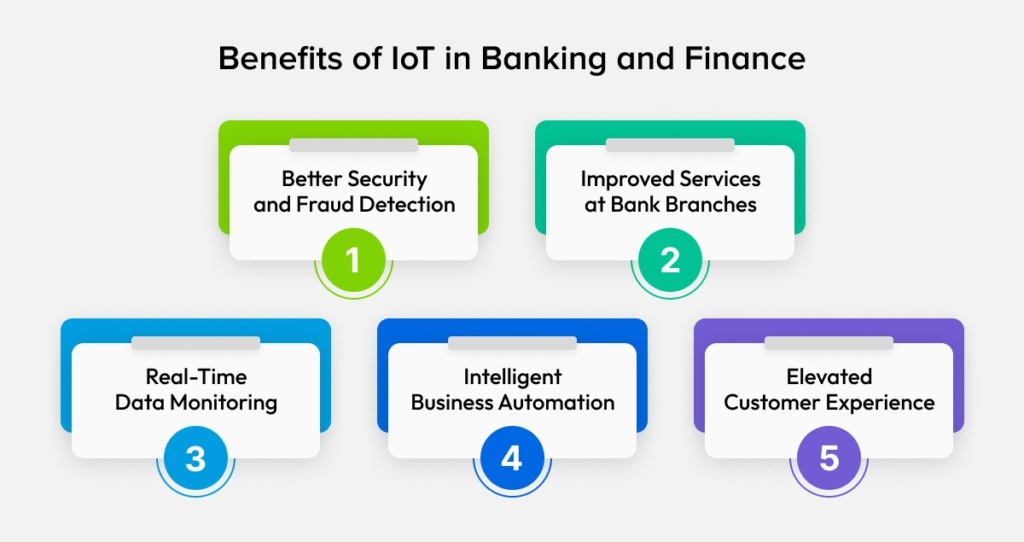
1. Smart ATMs and Cash-Recycling Machines
Modern ATMs are no longer isolated kiosks — they are fully connected IoT endpoints.
- Real-time monitoring of cash levels, printer status, and mechanical health
- Predictive maintenance that reduces unplanned downtime by 35–40%
- Dynamic cash replenishment routes using machine learning
- Immediate tamper or attack alerts sent to security operations centers
Real example: DBS Bank in Singapore rolled out over 1,200 smart ATMs with predictive analytics, cutting cash-logistics costs by 28% (Source: DBS Annual Report 2024).
2. Connected Branches & Employee Wearables
IoT beacons and sensors turn physical branches into data-rich environments.
- Bluetooth Low Energy (BLE) beacons trigger personalized offers when a customer enters
- Smart badges for employees show real-time queue length and customer wait times
- Heat-mapping analytics to optimize branch layout and staffing
Real example: BBVA Spain uses more than 60,000 beacons across its branch network to deliver location-based services, increasing cross-sell conversion by 19%.
3. Asset Tracking & Collateral Monitoring
Lending against movable assets (vehicles, machinery, luxury watches) becomes far less risky with IoT.
- GPS + immobilizer devices installed on financed cars
- Geofencing alerts if collateral leaves a predefined area
- Real-time condition monitoring (mileage, engine hours, battery health)
In 2025, Indian lender HDFC Bank tracks over 800,000 financed vehicles using IoT devices, reducing repossession costs by 42%.
4. Next-Generation Physical Security
IoT dramatically improves the security of branches, vaults, and cash-in-transit.
- AI-powered cameras that detect loitering, mask-wearing, or tailgating
- Connected vault doors with biometric + vibration sensors
- Automatic lockdown integration between cyber and physical security systems
Case study: Wells Fargo upgraded 4,800 branches with IoT security sensors, achieving a 61% drop in physical security incidents (Wells Fargo Security Report 2024).
5. Hyper-Personalized Banking via Wearables & Connected Devices
Customers now expect banking services to appear exactly when and where they need them.
- Proximity marketing: “You’re near our branch — skip the queue with mobile check-in”
- Apple Watch or Samsung Galaxy Watch banking with biometric authentication
- Contextual offers based on location, spending patterns, and even weather
Capital One’s beacon program sends personalized mortgage offers when customers walk past partner real-estate agencies, lifting pre-approval rates by 23%.
6. Usage-Based Insurance & Embedded Finance (Telematics)
Banks that own or partner with insurers are launching revolutionary products using IoT data.
| Product Type | Data Source | Avg. Customer Savings |
|---|---|---|
| Pay-as-you-drive auto insurance | Connected car OBD-II or smartphone telematics | 22–38% |
| Pay-how-you-live home insurance | Smart smoke detectors, water leak sensors | 15–25% |
| Health-linked life insurance | Fitbit, Apple Health, Oura Ring | Up to 30% |
ING Bank in Europe offers “ING Safe & Drive” bundled with car loans — customers who share telematics data receive both lower loan rates and lower insurance premiums.
7. Smart Buildings & ESG-Compliant Facility Management
With increasing regulatory pressure on sustainability, banks are using IoT to cut energy costs and meet ESG targets.
- Smart HVAC and lighting systems in branches and data centers
- Real-time energy consumption dashboards tied to carbon reporting
- Predictive maintenance for cooling systems (critical for data centers)
HSBC achieved a 21% reduction in branch energy consumption across its global network after deploying Schneider Electric’s EcoStruxure IoT platform in 2023–2025.
Key Challenges & How Leading Banks Are Solving Them
- Privacy & Compliance: Strict consent frameworks and data minimization (e.g., GDPR-compliant telematics programs)
- Cybersecurity: Zero-trust architecture + device certificate management
- Legacy Integration: Using MQTT or Edge gateways to connect old ATMs and branch systems
The Future: 2026 and Beyond
With 5G and edge computing maturing, we will soon see:
- Fully autonomous micro-branches with robotic tellers and IoT orchestration
- Real-time credit scoring using live IoT data streams
- Digital twins of entire bank networks for scenario planning
Related Topics: Best Manga Apps for Android and iOS
Conclusion
IoT is no longer a futuristic concept for banking — it is a present-day competitive advantage. Institutions that start small pilots today (smart ATMs, beacon marketing, or telematics insurance) will be best positioned to deliver the hyper-personalized, secure, and sustainable financial services customers expect tomorrow.
Related Topics: Seven Tech Gadgets You Must Have at Home
Frequently Asked Questions (FAQs)
1. Is IoT in banking secure?
Yes, when properly implemented. Leading banks use end-to-end encryption, device authentication, and zero-trust network architecture. Security standards such as ISO 27001 and PCI-DSS now explicitly cover IoT endpoints.
2. How much does it cost to implement IoT in a bank branch?
A basic beacon + sensor rollout for a mid-sized branch costs $15,000–$35,000, with ROI typically achieved in 9–14 months through energy savings and higher cross-sell rates.
3. Can customers opt out of IoT-based personalized offers?
Absolutely. Regulations (GDPR, CCPA, PDPA in Asia) require explicit opt-in consent, and customers can revoke permission at any time.
4. Which banks are leading in IoT adoption in 2025?
DBS (Singapore), BBVA (Spain), JPMorgan Chase, Wells Fargo, ING, and HDFC Bank are consistently ranked in the top 10 globally.
5. Will IoT replace physical bank branches?
No. It enhances them. IoT helps banks create “smart branches” that combine the trust of face-to-face interaction with digital convenience.