You’ve wiped down the outside of your tower, but your fans are still roaring like a jet engine. The real enemy isn’t the dust you can see—it’s the hidden buildup lodged deep inside your power supply, heat sinks, and graphics card. If you live in Missouri, where humidity and seasonal pollen create a sticky dust cocktail, this problem is even worse. Learning how to remove hidden dust PC Missouri residents face requires more than a quick wipe; it demands a systematic approach to internal cleaning that restores performance and extends hardware life.
The Problem-Agitate-Solution framework applies perfectly here. The problem is thermal throttling and component failure caused by invisible dust layers. You might have already tried compressed air on the visible areas, but the dust keeps coming back. The agitation is the frustration of watching your FPS drop or your PC shutting down randomly during a hot Missouri summer. The solution is a comprehensive, step-by-step teardown and cleaning strategy using the right tools, which we’ll cover in exhaustive detail below.
Why Is Hidden Dust in Your PC Dangerous for Missouri Residents?
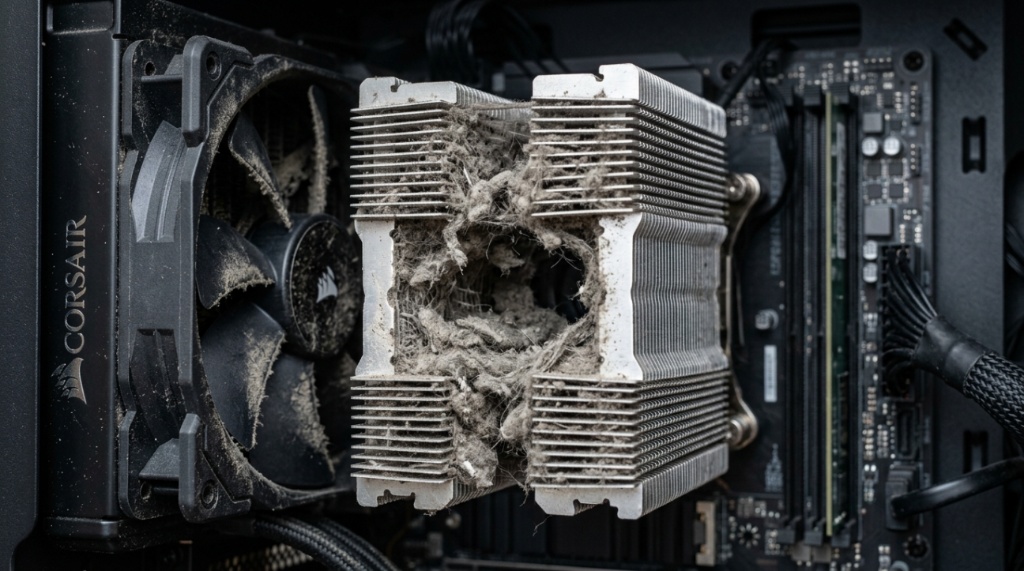
Hidden dust acts as an insulating blanket, trapping heat against critical components like the CPU, GPU, and voltage regulators. In Missouri’s climate, this thermal buildup accelerates and can lead to premature fan failure, capacitor aging, and even solder joint cracks on your motherboard. The fine particulate matter also absorbs moisture from the humid air, creating a conductive path that can cause short circuits.
The Unique Missouri Climate Factor
Missouri’s high humidity—often exceeding 70% during summer—causes dust to clump and adhere to surfaces like a sticky paste. Unlike the dry, fluffy dust in Arizona, Missouri dust is dense and granular. This mixture blocks micro-fins on heat sinks and clogs radiator cores, severely reducing airflow efficiency. If you don’t remove this hidden dust regularly, your cooling system works overtime, leading to higher electricity bills and louder noise.
How Hidden Dust Impacts Performance Metrics
When dust layers exceed 1mm on a heat sink, thermal conductivity drops by roughly 30%. Your CPU will begin to throttle its clock speed to reduce heat, resulting in stuttering and lag during gaming or rendering tasks. Dust hidden inside the power supply also reduces its efficiency rating, potentially causing system instability and unexpected reboots.
What Tools Do You Need to Remove Hidden Dust From Your PC?
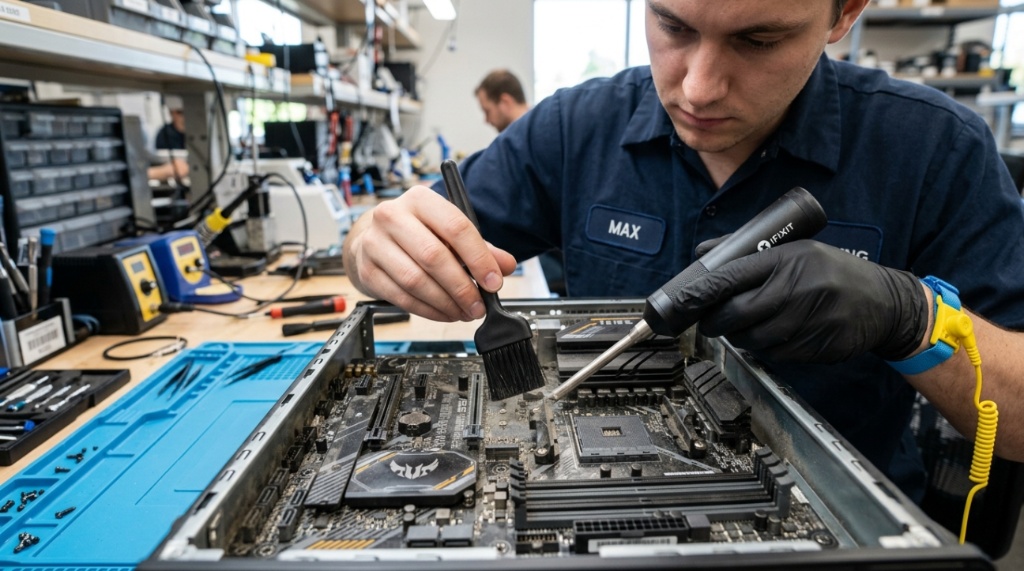
You don’t need a professional workshop, but using the wrong tools can damage sensitive electronics. The essential kit includes an electric air blower (not canned air), a set of anti-static brushes, 99% isopropyl alcohol, lint-free microfiber cloths, and a grounding wrist strap. For Missouri homes with pets, a HEPA filter vacuum with a soft brush attachment is critical for removing pet dander embedded in fans.
Electric Air Blower vs. Compressed Air Cans
Compressed air cans often blow moisture and leave behind bitterant residue. An electric air blower, like the ones used in professional repair shops, provides consistent, dry airflow that won’t freeze components or leave residue. Look for a blower with at least 600W power and adjustable speed settings to avoid spinning fans too fast, which can generate reverse voltage and damage the fan controller.
The Role of Isopropyl Alcohol and Cotton Swabs
For stubborn, caked-on dust in crevices, 99% isopropyl alcohol is safe for PCBs because it evaporates quickly without leaving conductive residue. Use foam swabs rather than cotton ones, as cotton can snag on solder joints and leave fibers. Never use water or household cleaners, as these can cause corrosion and leave a film that attracts even more dust.
How Often Should You Remove Hidden Dust From Your PC in Missouri?
The cleaning frequency for Missouri residents should be every 3 months, or every 2 months if you have pets or live near a construction zone. The humid climate causes dust to compact faster than in arid regions. If your PC intake fans have visible dust rings after just one month, that is a signal you need to clean the internal components more frequently.
Signs That Your PC Needs Immediate Internal Cleaning
Watch for these three telltale signs: first, fan noise that increases during light use; second, a 10-15% drop in benchmark scores; third, exhaust air that feels hotter than usual. These symptoms indicate that hidden dust is already impacting thermal performance. Ignoring them invites long-term hardware damage,While keeping your hardware clean prevents overheating, software glitches can also slow you down—if you ever encounter playback errors on other devices, check out how to Solve Common Popcornflix Streaming Issues for quick fixes.
Seasonal Cleaning Schedule for Missouri Weather Patterns
Create a cleaning schedule aligned with Missouri’s seasons. Clean deeply in late April before summer humidity peaks, again in late August before fall pollen season, and once in December to clear out dry winter dust from heating systems. This biannual-plus approach ensures you stay ahead of the dust accumulation curve.
How to Safely Open Your PC Case for Hidden Dust Removal?
Safety begins before you touch any screw: power down the PC completely, unplug the power cable, and press the power button for 5 seconds to discharge capacitors. Move the PC case to a well-lit, open area like a kitchen counter or garage workbench. Use a magnetic screwdriver to avoid losing screws in carpet, and set them aside in a labeled container.
Grounding Yourself to Prevent ESD Damage
Electrostatic discharge (ESD) is an invisible killer of PC components. Wear a grounding wrist strap clipped to the metal chassis of the case. If you don’t have a strap, touch a metal faucet with both hands before handling any internal parts. This equalizes the electrical potential and prevents static electricity from frying your motherboard.
Before and After Photo Documentation
Take a photo with your smartphone before removing any components. This documentation helps you remember cable routing and component placement during reassembly. For first-timers, it also provides a reference point to ensure you don’t miss any screws or cables when putting everything back together.
How to Remove Hidden Dust From CPU Coolers and Radiators?
CPU coolers and liquid cooling radiators are the largest dust magnets in your system. To clean an air cooler, detach the fan clips and remove the fan to expose the aluminum fins. Use your electric blower in short bursts, angled so air moves parallel to the fins, not perpendicular, which can bend them. For radiators, hold the blower on one side while a vacuum sucks from the other side to pull out embedded dust.
Step-by-Step: Cleaning an Air Tower Cooler
First, unclip the fan and set it aside. Second, use a soft brush to gently sweep dust from between the fins into the open air. Third, use compressed air or an electric blower at medium speed to dislodge the remaining particles. Finally, wipe the base plate with isopropyl alcohol if you plan to reapply thermal paste.
Flushing Radiator Dust from Liquid Cooling Loops
For AIO and custom loops, dust builds up between the fan and the radiator core. Remove the fans from the radiator and clean the radiator fins with a fine-toothed comb or a radiator-specific brush. Hold the radiator under a gentle stream of tap water if it’s fully dried, but ensure it is 100% dry before reattaching the fans.
How to Clean Hidden Dust From Graphics Card Heat Sinks?
Graphics cards accumulate dust in the fin stack and in the shroud that surrounds the fans. Use a small Phillips screwdriver to remove the backplate screws and separate the shroud from the PCB. Be careful not to tear the thermal pads or strip the tiny screws. Once exposed, use your blower to clean the dense fin array thoroughly.
Cleaning GPU Fans Without Disassembly
If disassembly seems daunting, you can hold the fan blades still with your finger and use short puffs of air from a blower. This prevents the fans from spinning freely and generating a voltage spike that could damage the GPU’s motor driver chip. Clean the shroud’s air intake holes with a damp microfiber cloth afterward.
Removing Dust from Under the GPU Backplate
Dust hides underneath the backplate in the gap between the PCB and the metal plate. Remove the four screws holding the backplate and wipe the interior surface with a dry brush. This area is critical because dust here can trap heat around the memory modules and VRM components, causing thermal throttling.
How to Remove Dust From Your Power Supply Safely?
The power supply unit (PSU) is the most dangerous component to clean due to high-voltage capacitors. Never open the PSU casing—this voids the warranty and risks lethal electric shock. Instead, use the blower through the rear grill and the fan vent on the bottom. Use short bursts to push dust out without spinning the fan too fast.
Safe Airflow Techniques for PSU Cleaning
Position the blower nozzle at the PSU’s intake fan and blow in short 2-second bursts. Do not hold the fan stationary for long periods. Follow up by using a vacuum on the exterior grill to capture any dislodged dust. If the PSU fan makes grinding noises after cleaning, consider a professional replacement.
Why PSU Dust is a Fire Hazard
Dust inside the PSU can retain moisture from Missouri’s humid air, potentially leading to a short circuit or arc flash. This hidden dust also reduces the efficiency of the PSU, causing it to produce more heat. Keeping the PSU clean is crucial for the entire system’s stability and safety.
Which Hidden Dust Areas Do Most Guides Miss?
Most guides focus on the CPU and GPU but forget the front panel intake filters, underside of the case, the chipset heat sink, and M.2 SSD thermal shields. Dust settles on the underside of the top case panel and around the rear I/O ports. These areas contribute significantly to overall airflow blockage, so focus on them during your next deep clean.
The Chipset and VRM Heat Sink Blind Spot
On many motherboards, the chipset and voltage regulator module (VRM) heat sinks are small, low-profile fin stacks. They collect a surprising amount of dust because of their location near the rear exhaust fans. Use a narrow nozzle or a soft paintbrush to reach into these tiny fins and gently sweep out debris.
Front Panel Intake Filter and Case Mesh Layers
Your PC’s front mesh is the first line of defense, but it can also become the first place dust accumulates. Remove the front panel and wash the magnetic dust filter with warm soapy water. Let it air dry completely before reattaching, as wet filters restrict airflow more than dirty ones.
How to Remove Hidden Dust From PC Moisture Build-Up in Missouri?
Missouri’s high humidity means that even after cleaning, moisture can cause dust to become sticky and attract more particles. To combat this, use a dehumidifier in the room where your PC resides, keeping relative humidity between 40% and 50%. Also, ensure your case has positive air pressure to reduce the intake of unfiltered air from gaps.
Positive vs Negative Pressure Setup
If you have more exhaust fans than intake fans, your PC operates under negative pressure, pulling dust through every crack and expansion slot. Change this by having more intake fans or increasing the speed of your intake fans. Positive pressure forces air out through small gaps, preventing dust from entering through unfiltered openings.
Using Dust Filters and Nanotech Protectants
Apply a thin layer of dust-repellent protectant coating to fan blades and case interiors. This product creates a slick surface that causes dust to slide off rather than stick. Reapply every two cleanings for maximum effectiveness, especially during the summer months when humidity peaks.
What Are the Common Mistakes When Removing Hidden Dust?
There are several frequent errors that turn a routine cleaning into a costly repair. Using a standard household vacuum creates static electricity and can suck up small screws or jumpers. Holding fans still while using an air blower is good, but touching the PCB with metal tools is bad. Also, cleaning with the PC still plugged in violates every safety protocol.
Holding Fans Still: Yes or No?
Yes, you should always hold fan blades stationary when cleaning them. Spinning fans act like generators, sending reverse current back into the motherboard. This can potentially damage the fan header or the integrated controller chip. Use a finger or a plastic tool to stabilize the hub before applying compressed air.
Why You Shouldn’t Use a Vacuum on Motherboards
Vacuum cleaners generate an immense amount of static electricity, which can destroy sensitive transistors on the motherboard. Even with a brush attachment, the risk of ESD is high. Additionally, standard vacuums are not precise enough and can accidentally rip out tiny capacitors or CMOS batteries.
Can Professional Cleaning Services Save You Time in Missouri?
If you lack the time or confidence to tear down your PC, professional cleaning services exist in major Missouri cities like St. Louis, Kansas City, Springfield, and Columbia. These services use industrial-grade ultrasonic cleaners and specialized vacuums to remove every trace of dust. However, a professional deep clean will cost between $50 and $150, depending on the system type (air or liquid cooled).
Do-It-Yourself vs. Professional Cost-Benefit Breakdown
DIY cleaning costs roughly $40 for the initial tool kit, and each subsequent cleaning is free. Professional cleaning costs more but includes thermal paste replacement and thorough testing. If you own a high-end workstation or water-cooled system, the professional service justifies the expense by ensuring no costly components are damaged during cleaning.
How to Choose a Reliable PC Cleaner
Look for a technician with Google Guaranteed badge or with certifiable experience in microelectronics. Read reviews regarding their handling of delicate components. Ensure they provide a before-and-after thermographic report to prove their cleaning effectiveness. Ask about their insurance policy regarding rare or hard-to-find parts.
To simplify your maintenance routine, consider investing in specialized tools that are proven for this specific task. You can remove hidden dust PC Missouri efficiently with budget-friendly equipment that won’t break the bank.
How to Prevent Hidden Dust Build-Up After Cleaning?
Prevention is the final step in any dust management strategy. After thoroughly cleaning, your next focus should be on environmental controls. Elevate your PC case off the floor by at least 4 inches, as ground-level air is dustier. For Missouri homes with carpets, place a rigid plastic mat under the PC to block trapped dust.
Upgrading to High-Static-Pressure Fans
Case fans with high static pressure (like those rated over 2.5 mmH2O) are better at pushing air through dense dust filters and radiator fins. They maintain effective air pressure in the case even when dust begins to accumulate, giving you a longer window between cleanings without performance loss.
Investing in Fully Enclosed Cases with Filtered Vents
Modern cases like the Fractal Design Define series or the Lian Li Lancool series come with magnetic, washable dust filters on all intake points. These designs trap dust before it enters the chassis, making your job easier. Ensure that all expansion slot covers are in place to prevent dust from entering through rear gaps.
Frequently Asked Questions
How long does a thorough PC cleaning take?
For a beginner, a full teardown cleaning of a standard tower takes between 1.5 and 2.5 hours. Professionals with experience can complete the same task in under 45 minutes. Including the time to dry filters, expect a total project time of about half a day.
Will cleaning hidden dust improve my PC performance?
Yes. If your system was throttling due to heat, you may regain 10-15% of lost performance. Your fans will also run quieter, and your system will be more stable. You are effectively restoring the original thermal design of your components.
Can I use a leaf blower to clean my PC?
Never use a leaf blower. The force and volume of air are too high, which can snap fan blades, bend heat sink fins, and dislodge capacitors. Stick to a dedicated PC electric air blower or canned air specifically for electronics.
Is it safe to clean my PC with the power supply switch off?
No, you must unplug the power cable from the wall. The PSU switch only cuts off the mains current; the standby voltage on the motherboard remains active. Unplugging ensures zero power to the system and eliminates the risk of electric shock.
How do I clean dust from my laptop in Missouri?
For laptops, use a thin tool to gently pry off the bottom cover. Use your blower to clean the fan and exhaust fins. Avoid hitting the battery with compressed air. If the laptop is still under warranty, consider having a professional do it to avoid accidental damage.
Does dust cause coil whine or buzzing noises?
No, coil whine is an electrical phenomenon, not a dust issue. However, dust can cause fan bearings to strain, leading to a buzzing sound. If cleaning doesn’t stop the noise, it’s likely the fan bearing is failing and needs replacement.
Conclusion
Removing hidden dust from your PC is the single most effective way to improve longevity and performance, especially in the humid climate of Missouri. You must go beyond superficial cleaning and deep-clean the CPU cooler, GPU, power supply, and motherboard. By following the detailed procedures outlined above, you can eliminate thermal throttling and prevent catastrophic component failure.
Take action today. Gather your cleaning tools, schedule a deep clean for this weekend, and observe the difference in noise and temperature. For best results, implement a maintenance routine that adapts to the changing seasons. If you need reliable, affordable equipment to get started, check out local specialty options that make the process easier. Your PC will thank you with years of reliable, high-speed operation.