
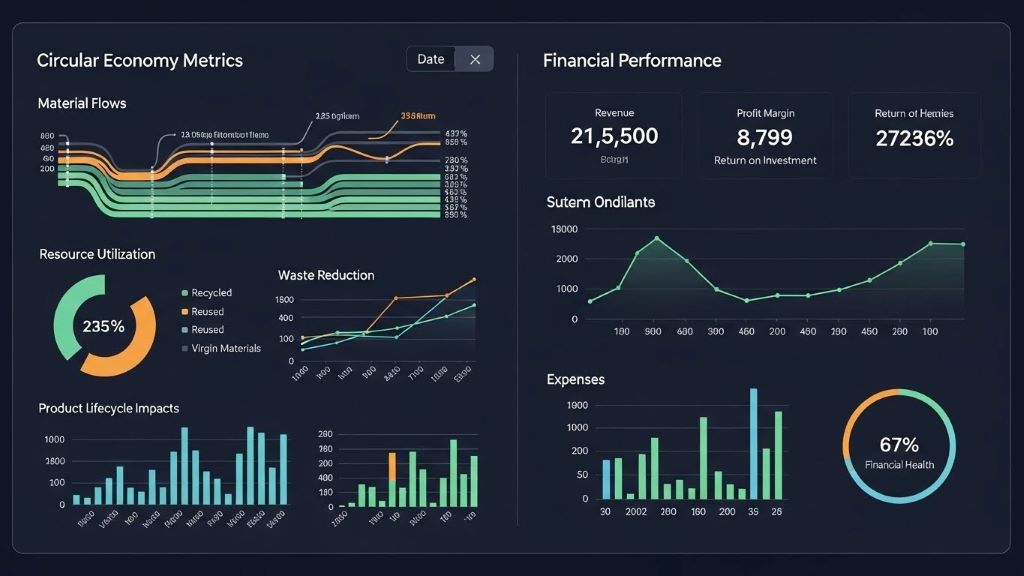
The circular economy represents a fundamental shift in how businesses operate. Companies are moving away from the traditional linear model of take-make-dispose. Instead, they’re embracing systems that keep resources in use for as long as possible. However, making this transition requires more than just good intentions. Businesses need the right tools to measure progress and align their operations with circular principles.
Circ apps offer a powerful solution for organizations looking to bridge the gap between sustainability ambitions and measurable outcomes. These digital platforms help companies track circular economy metrics while ensuring that environmental goals support broader business objectives. Therefore, understanding how to effectively use these tools is essential for any organization committed to sustainable growth.
Understanding Circular Metrics and Their Business Value
Circular metrics measure how well a company follows circular economy principles. These measurements go beyond traditional environmental indicators. They track material flows, product lifecycles, resource efficiency, and waste reduction. Additionally, they provide insights into how circular practices impact the bottom line.
The value of circular metrics extends throughout an organization. Supply chain managers use them to optimize material sourcing. Product designers rely on them to create more sustainable offerings. Financial teams analyze them to identify cost savings. Meanwhile, marketing departments leverage circular performance data to strengthen brand reputation.
Successful businesses recognize that circular metrics shouldn’t exist in isolation. Instead, these measurements must connect directly to strategic business goals. This alignment ensures that sustainability initiatives receive proper resources and executive support. Moreover, it helps organizations demonstrate the financial benefits of circular practices to stakeholders.
Setting Clear Business Goals Before Implementing Circ Apps
Before diving into any circ app, companies must first define their business objectives. What does success look like for your organization? Are you focused on reducing operational costs? Perhaps you’re working to meet regulatory requirements or attract environmentally conscious customers. Each goal requires different metrics and approaches.
Start by conducting a thorough assessment of your current operations. Identify areas where circular practices could deliver the most value. For instance, a manufacturing company might prioritize material efficiency to reduce input costs. Conversely, a retail business might focus on product take-back programs to build customer loyalty.
Next, establish specific, measurable targets. Vague goals like “become more sustainable” won’t drive meaningful change. Instead, set concrete objectives such as “reduce virgin material use by 30% within two years” or “achieve 80% product recovery rate by 2026.” These clear targets make it easier to select appropriate metrics and track progress using circ apps.
Choosing the Right Circular Metrics for Your Business
Not all circular metrics carry equal weight for every organization. The key is selecting indicators that directly support your strategic goals. Common circular metrics include material circularity indicators, product longevity scores, waste diversion rates, and secondary material usage percentages.
Material circularity indicators measure what portion of inputs come from recycled or renewable sources. These metrics help businesses reduce dependence on virgin materials. Product longevity scores track how long items remain in use before disposal. This measurement is particularly valuable for companies focused on durability and repairability.
Waste diversion rates show how much material gets redirected from landfills through recycling, composting, or reuse programs. Meanwhile, secondary material usage tracks the percentage of recycled content in products. Together, these metrics provide a comprehensive view of circular performance.
According to the Ellen MacArthur Foundation, businesses that track circular metrics systematically often discover new revenue opportunities through circular business models. Furthermore, these measurements help companies communicate their environmental impact more effectively to investors and customers.
Integrating Circ Apps into Your Operations
Once you’ve identified relevant metrics, the next step involves implementing a circ app that can track them effectively. Modern circular economy platforms offer various features designed to streamline data collection and analysis. Look for apps that integrate seamlessly with your existing systems and workflows.
Begin with a pilot program in one department or product line. This approach allows your team to learn the platform without overwhelming the entire organization. Gather feedback from users during this phase. Their insights will prove invaluable when rolling out the app more broadly.
Training plays a critical role in successful implementation. Employees need to understand not just how to use the app, but why circular metrics matter. Explain the connection between the data they’re entering and the company’s strategic goals. This context helps build buy-in and ensures more accurate reporting.
Integration with other business systems amplifies the value of circ apps. Connect your circular metrics platform with enterprise resource planning software, supply chain management tools, and financial systems. This integration provides a holistic view of how circular practices impact overall business performance.
Aligning Circular Metrics with Financial Performance
One of the most powerful aspects of circ apps is their ability to demonstrate the financial benefits of circular practices. These platforms can track cost savings from reduced material purchases, lower waste disposal fees, and decreased energy consumption. Additionally, they can measure revenue generated from circular business models like product-as-a-service or recommerce programs.
Create dashboards that display both circular metrics and financial indicators side by side. This visualization helps executives see the direct correlation between sustainability efforts and business outcomes. For example, show how increasing recycled content percentages led to lower procurement costs or how extending product lifecycles improved customer lifetime value.
The World Economic Forum has highlighted that companies embracing circular economy principles can unlock significant economic value while reducing environmental impact. Therefore, presenting circular metrics through a financial lens often resonates more strongly with decision-makers than environmental arguments alone.

Monitoring Progress and Adjusting Strategy
Implementing a circ app is not a one-time project. It requires ongoing monitoring and adjustment. Set regular review intervals to assess progress toward your circular goals. Monthly or quarterly check-ins work well for most organizations. During these reviews, analyze trends in your metrics and identify any obstacles hindering progress.
Be prepared to refine your approach based on what the data reveals. Perhaps certain metrics aren’t providing useful insights, or maybe you’ve discovered new opportunities for circular innovation. Flexibility is essential. The circular economy is still evolving, and new best practices emerge regularly.
Celebrate successes along the way. When your team hits a circular economy milestone, share it widely within the organization. Recognition reinforces the importance of these efforts and motivates continued engagement. Moreover, publicizing achievements externally can enhance your brand reputation and attract sustainability-minded customers.
Engaging Stakeholders Through Transparent Reporting
Circ apps make it easier to communicate circular economy performance to various stakeholders. Investors increasingly demand environmental, social, and governance data. Customers want to know the environmental impact of their purchases. Regulators require compliance with extended producer responsibility laws and other circular economy policies.
Use your circ app to generate reports tailored to different audiences. Create detailed technical reports for regulatory submissions. Develop simplified summaries for marketing materials. Prepare investor-focused analyses that highlight financial returns from circular initiatives. This targeted communication ensures each stakeholder group receives relevant information in an accessible format.
Transparency builds trust. Don’t just share successes; be honest about challenges and areas for improvement. This authenticity resonates with stakeholders and demonstrates genuine commitment to continuous progress rather than greenwashing.
Leveraging Technology for Continuous Improvement
Modern circ apps increasingly incorporate advanced technologies like artificial intelligence and machine learning. These tools can identify patterns in your circular economy data that humans might miss. They can predict future performance, suggest optimization opportunities, and benchmark your results against industry peers.
Take advantage of these capabilities to drive continuous improvement. Use predictive analytics to anticipate material shortages or price fluctuations. Leverage AI-powered recommendations to optimize product design for circularity. Compare your performance against competitors to identify areas where you’re leading and where you have room to grow.
However, remember that technology is an enabler, not a solution in itself. The most sophisticated circ app won’t create change without committed leadership, engaged employees, and organizational culture that values circular principles. Therefore, invest in both technology and people to maximize results.
Conclusion
Aligning business goals with circular metrics through circ apps represents a strategic approach to sustainable growth. By carefully selecting metrics that support specific objectives, organizations can demonstrate the financial value of circular practices. Successful implementation requires clear goal-setting, appropriate metric selection, seamless integration with existing systems, and ongoing monitoring.
The connection between circular economy performance and business success becomes increasingly clear when tracked systematically. Circ apps provide the tools needed to make this connection visible to stakeholders at all levels. As more companies embrace circular principles, those who effectively measure and manage their progress will gain competitive advantages in efficiency, innovation, and brand reputation.
Ultimately, the circular economy isn’t just about environmental responsibility. It’s about building more resilient, profitable, and future-ready businesses. With the right metrics, tools, and commitment, any organization can harness circular principles to achieve both sustainability and financial success.
Frequently Asked Questions
What are circular metrics and why do they matter for business?
Circular metrics measure how effectively a company follows circular economy principles, such as material reuse, product longevity, and waste reduction. They matter because they help businesses reduce costs, comply with regulations, attract conscious consumers, and identify new revenue opportunities through circular business models.
How do I choose which circular metrics to track in my circ app?
Choose metrics that directly align with your strategic business goals. If cost reduction is a priority, focus on material efficiency and waste diversion rates. If customer retention matters most, track product take-back and refurbishment rates. Start with three to five key metrics rather than trying to measure everything at once.
Can small businesses benefit from using circ apps to track circular metrics?
Absolutely. Small businesses can benefit significantly from circ apps. Many platforms offer scalable solutions suitable for companies of all sizes. Even basic tracking of material flows and waste streams can reveal cost-saving opportunities and help small businesses differentiate themselves in increasingly sustainability-conscious markets.
How long does it take to see business results from tracking circular metrics?
Results vary depending on your starting point and goals. Some benefits, like reduced waste disposal costs, appear within months. Others, such as revenue from new circular business models, may take one to two years to materialize. However, the insights gained from tracking metrics help optimize strategies over time, accelerating results.
What’s the difference between circular metrics and traditional sustainability metrics?
Traditional sustainability metrics often focus on reducing negative impacts, such as carbon emissions or water usage. Circular metrics go further by measuring positive contributions to resource efficiency and closed-loop systems. They track how materials flow through and back into the economy, emphasizing value retention rather than just harm reduction.
Related Topics:
Watching with Friends: Popcornflix Watch Parties
The Open Source Revolution: Rise of the Free and Collaborative Software Symphony