
Modern facility management demands accurate data for strategic decision-making. Archibus software transforms how organizations manage buildings, assets, and resources through comprehensive data analytics. This integrated workplace management system collects, analyzes, and presents facility information in actionable formats.
Understanding how Archibus enables data-driven decisions helps facility managers optimize operations and reduce costs. This guide explores the platform’s capabilities and demonstrates practical applications for smarter facility management.
Understanding Archibus as an Integrated Workplace Management System
Archibus functions as a centralized platform consolidating all facility-related information. The software integrates space planning, maintenance management, capital project planning, and environmental sustainability tracking. Therefore, facility managers access complete building intelligence from a single interface.
The platform operates on a unified data model connecting disparate facility information. Real estate portfolios, work orders, space allocations, and equipment inventories link together logically. Additionally, this integration eliminates data silos that plague organizations using multiple disconnected systems.
Cloud-based and on-premise deployment options accommodate different organizational needs. Cloud solutions provide flexibility and reduced IT infrastructure requirements. However, on-premise installations offer greater control for organizations with specific security requirements.
Archibus serves various industries including healthcare, education, government, and corporate real estate. Each sector benefits from customizable modules addressing industry-specific facility challenges. Moreover, the platform scales from single buildings to global real estate portfolios.
Centralizing Facility Data for Comprehensive Analysis
Data centralization represents Archibus’s foundational strength for decision-making. The software aggregates information from building automation systems, IoT sensors, and manual inputs. This comprehensive data collection creates a complete picture of facility performance.
Space management data includes room dimensions, occupancy rates, and utilization patterns. The system tracks who occupies which spaces and how frequently areas receive use. Therefore, organizations identify underutilized spaces and optimize real estate investments.
Maintenance records document every work order, preventive maintenance task, and equipment service history. Technicians log completion times, parts used, and problems encountered. Additionally, this historical data reveals patterns indicating recurring issues or aging equipment.
Financial information links costs to specific buildings, departments, or cost centers. Utility expenses, maintenance spending, and capital improvements connect to physical spaces. Moreover, this financial transparency enables accurate cost allocation and budgeting.
Leveraging Real-Time Space Utilization Analytics
Space utilization analytics reveal how organizations actually use their facilities versus planned allocations. Sensor data and reservation systems track occupancy patterns throughout days, weeks, and seasons. This information exposes expensive underutilized spaces.
Heat maps visualize space usage intensity across floor plans. Color-coded displays show heavily used conference rooms, frequently occupied desks, and rarely visited areas. Therefore, facility managers make informed decisions about space reallocation or consolidation.
Hybrid work models create complex space utilization challenges. Archibus tracks desk reservations, meeting room bookings, and actual occupancy simultaneously. Additionally, the platform identifies optimal ratios between assigned desks and shared workspaces.
Right-sizing real estate portfolios requires accurate utilization data. Organizations avoid paying for unnecessary square footage by identifying consolidation opportunities. However, decisions balance space reduction against employee needs and future growth.
According to Facility Executive, data-driven facility management can reduce operational costs by 15 to 30 percent while improving space efficiency and occupant satisfaction.
Optimizing Maintenance Operations Through Predictive Analytics
Predictive maintenance transforms reactive approaches into proactive strategies. Archibus analyzes equipment performance data, maintenance history, and manufacturer specifications. The system predicts failures before they occur, preventing costly emergency repairs.
Work order data reveals maintenance patterns and technician productivity. Managers identify which equipment requires frequent repairs and evaluate maintenance team efficiency. Therefore, organizations allocate resources where they deliver maximum impact.
Preventive maintenance scheduling becomes automated based on manufacturer recommendations and actual usage. The software generates work orders at optimal intervals, preventing both over-maintenance and equipment failures. Additionally, technicians receive mobile access to work orders and equipment histories.
Equipment lifecycle management relies on comprehensive asset data. Archibus tracks acquisition dates, maintenance costs, and performance degradation over time. Moreover, this information supports data-driven replacement decisions balancing repair costs against new equipment investments.
Spare parts inventory optimization prevents both stockouts and excess inventory. The system analyzes parts usage patterns and lead times. Consequently, organizations maintain appropriate inventory levels without tying up excessive capital.
Supporting Strategic Capital Planning Decisions
Capital project planning requires accurate facility condition assessments and financial forecasting. Archibus maintains detailed condition ratings for building systems and components. These assessments identify deferred maintenance and prioritize capital investments.
Facility condition indices score overall building health based on systematic inspections. Scores combine age, condition, and criticality of building systems. Therefore, organizations objectively compare facilities and allocate capital budgets strategically.
Multi-year capital planning scenarios model different investment strategies. Planners simulate maintaining current spending, addressing deferred maintenance, or prioritizing specific building systems. Additionally, the software forecasts future conditions under each scenario.
Budget justification becomes easier with comprehensive facility data. Visual reports demonstrate consequences of underfunding versus adequate capital investment. Moreover, stakeholders see clear connections between spending decisions and facility performance.
Return on investment calculations support project prioritization. Energy efficiency upgrades, space reconfigurations, and equipment replacements include projected savings. However, Archibus tracks actual results against projections, improving future forecasting accuracy.
Enhancing Energy Management and Sustainability Initiatives
Energy management modules track consumption across utilities and buildings. The platform integrates with building automation systems collecting real-time energy data. This granular information identifies waste and optimization opportunities.
Utility bill management consolidates invoices and validates charges against consumption data. Automated processes flag billing errors and unusual consumption patterns. Therefore, organizations avoid overpaying and quickly address energy waste.
Benchmarking compares building performance against similar facilities or industry standards. Energy use intensity metrics normalize consumption by square footage or occupancy. Additionally, these comparisons identify underperforming buildings requiring investigation.
Carbon footprint tracking supports sustainability reporting requirements. Archibus calculates greenhouse gas emissions from energy consumption, waste generation, and other facility operations. Moreover, the platform monitors progress toward sustainability goals.
Energy conservation measures receive data-driven evaluation. Historical consumption data establishes baselines for measuring improvement. Consequently, organizations verify that lighting upgrades, HVAC optimizations, and other initiatives deliver promised savings.
Improving Space Planning with Data Visualization
Interactive floor plans transform static CAD drawings into dynamic management tools. Digital floor plans display real-time space assignments, equipment locations, and sensor data. Users click spaces to access detailed information instantly.
Scenario planning tools model space reconfigurations before implementation. Planners test different furniture layouts, department relocations, and adjacency requirements virtually. Therefore, organizations avoid costly mistakes and optimize space before construction.
Move management capabilities streamline relocations and reorganizations. The software tracks move requests, assigns spaces, and generates moving instructions. Additionally, integrated workflows ensure IT, security, and facilities coordinate seamlessly.
Space charging and cost allocation require accurate occupancy data. Archibus calculates costs per square foot and assigns expenses to departments or cost centers. Moreover, this transparency encourages efficient space usage across organizations.
According to Commercial Property Executive, integrated workplace management systems like Archibus help property managers make better decisions by providing actionable insights from consolidated data sources.
Enabling Mobile Access for Field Teams
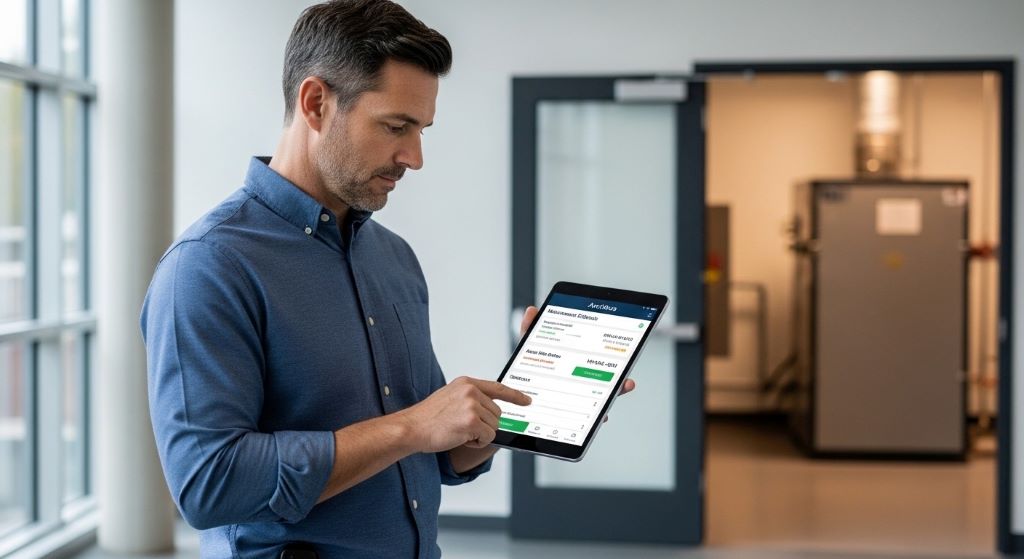
Mobile applications extend Archibus capabilities to technicians and inspectors in the field. Workers access work orders, equipment histories, and floor plans from smartphones or tablets. This real-time information improves first-time fix rates and productivity.
Offline functionality ensures access even in areas with poor connectivity. Technicians download necessary information before entering basements or remote locations. Additionally, data synchronizes automatically when connections restore.
Photo documentation capabilities enhance work order records. Field teams photograph completed work, equipment conditions, or problems requiring follow-up. Therefore, historical records include visual evidence supporting future decisions.
Barcode and QR code scanning streamlines equipment identification. Technicians scan asset tags to instantly access maintenance histories and specifications. Moreover, this reduces errors from manual data entry or equipment misidentification.
Digital signatures capture approvals and confirmations during field work. Completed work orders include technician and customer signatures documenting service delivery. Consequently, organizations maintain complete audit trails for quality assurance.
Generating Actionable Reports and Dashboards
Executive dashboards present key performance indicators at a glance. Facility leaders monitor space utilization, maintenance backlog, energy consumption, and budget variance. Customizable displays focus attention on metrics requiring immediate action.
Scheduled reports automate routine information distribution. Monthly maintenance summaries, quarterly space reports, and annual capital planning documents generate automatically. Additionally, recipients receive consistent information without manual compilation effort.
Ad hoc reporting capabilities empower users to answer specific questions. Drag-and-drop report builders allow non-technical users to create custom reports. Therefore, facility managers investigate issues independently without waiting for IT support.
Trend analysis reveals patterns invisible in snapshot reports. Multi-year comparisons show whether conditions improve, deteriorate, or remain stable. Moreover, these trends inform strategic planning and resource allocation decisions.
Drill-down functionality connects summary metrics to underlying details. Executives viewing portfolio-level metrics can investigate specific buildings, floors, or equipment. However, appropriate security controls ensure users only access authorized information.
Integrating with Other Enterprise Systems
ERP integration connects facility data with financial, procurement, and human resources systems. Work orders trigger purchase requisitions automatically when parts are needed. Additionally, space assignments synchronize with HR systems tracking employee locations.
Building automation system integration provides real-time operational data. HVAC performance, lighting status, and access control events flow into Archibus continuously. Therefore, facility managers monitor building operations alongside space and maintenance data.
Computer-aided design integration maintains consistency between CAD drawings and facility databases. Changes to floor plans update space inventories automatically. Moreover, bidirectional integration ensures architects and facility managers work from current information.
IoT sensor integration enables advanced analytics and automation. Occupancy sensors, environmental monitors, and equipment sensors provide continuous data streams. Consequently, organizations implement smart building strategies based on actual conditions rather than assumptions.
API capabilities allow custom integrations with specialized systems. Organizations connect tenant billing systems, security platforms, or industry-specific applications. However, robust APIs require technical expertise for implementation and maintenance.
Ensuring Data Quality and Governance
Data quality determines analytical accuracy and decision reliability. Archibus includes validation rules preventing incomplete or inconsistent information entry. Required fields, acceptable value ranges, and format standards maintain data integrity.
Regular data audits identify inconsistencies requiring correction. Automated reports flag missing information, duplicate records, or unusual values. Therefore, data stewards address quality issues before they compromise decisions.
User training ensures consistent data entry practices. Organizations establish standards for how information should be recorded and updated. Additionally, role-based training focuses on data relevant to each user group.
Change management processes control database modifications. Approval workflows prevent unauthorized changes to critical information like space assignments or asset values. Moreover, audit trails document who changed what and when.
Data governance policies establish accountability for information accuracy. Specific individuals own data quality within their domains. Consequently, space planners, maintenance managers, and financial controllers each maintain their respective data.
Conclusion
Archibus software enables data-driven facility decisions through comprehensive information integration, powerful analytics, and intuitive reporting. The platform centralizes space, maintenance, financial, and operational data, revealing insights impossible with fragmented systems. Real-time dashboards, predictive analytics, and mobile access empower facility managers to optimize resources and reduce costs. Therefore, organizations implementing Archibus transition from reactive facility management to strategic decision-making based on accurate, actionable intelligence. The investment in integrated workplace management systems pays dividends through improved space utilization, efficient maintenance operations, and informed capital planning that aligns facility resources with organizational objectives.
Frequently Asked Questions
What types of data does Archibus software collect and analyze?
Archibus collects space allocation data, maintenance records, energy consumption, financial information, equipment inventories, work orders, and occupancy patterns. The platform integrates building automation systems, IoT sensors, and manual inputs to create comprehensive facility intelligence supporting informed decisions.
How does Archibus improve space utilization in buildings?
Archibus tracks actual space usage through sensors and reservation systems, comparing utilization against allocated spaces. Heat maps visualize occupancy patterns, identifying underutilized areas. Therefore, organizations optimize real estate investments by right-sizing portfolios and reallocating spaces based on actual needs.
Can Archibus integrate with existing building management systems?
Yes, Archibus integrates with building automation systems, ERP platforms, CAD software, and IoT sensors through APIs and standard protocols. These integrations consolidate data from multiple sources, eliminating silos and providing comprehensive facility intelligence within a single platform.
What are the main benefits of using Archibus for maintenance management?
Archibus enables predictive maintenance through equipment performance analysis, automates preventive maintenance scheduling, and provides mobile access to work orders. The platform tracks maintenance histories, optimizes spare parts inventory, and identifies recurring problems, reducing costs while improving equipment reliability.
How long does it take to implement Archibus software?
Implementation timelines vary based on organization size, module selection, and data migration complexity. Small deployments may complete in three to six months, while enterprise implementations require 12 to 18 months. However, phased approaches allow organizations to realize benefits incrementally during implementation.
Related Topics:
The Open Source Revolution: Rise of the Free and Collaborative Software Symphony
Tech Toolbox: Choosing the Right Software and Apps for Needs